Happy Texas Chain Saw Day: The Life of Leatherface
Every August 18th, horror fans mark Texas Chain Saw Day in honor of Tobe Hooper's original nightmare and the twisted family that grew out of it. Most franchise retrospectives run the films in release order, but that's not really the story. Leatherface isn't a static boogeyman — across the franchise's official releases, he ages, learns, loses people, and slowly calcifies into the silent, mask-wearing recluse everyone remembers. Watch it in release order and you get whiplash. Watch it in plot order and you get a life.
One note before we dig in: this isn't one single continuity. The Sawyer family — Leatherface's original family, introduced in 1974 — got a full birth-to-death arc across seven films. Then, separately, 2003 and 2006 rebooted the mythology from scratch with a different family (the Hewitts) telling a parallel version of the same story. We're running the Sawyer thread as the main event, since it's the one that actually takes Leatherface from a scared kid to a dying old man, and treating the Hewitt films as the alternate retelling they are. Every title below links out to its full entry on the Holiday Horror Database.
The Main Timeline: Leatherface Sawyer, Birth to Hermit
1. Leatherface (2017)
The child. It opens in 1955, when a young boy named Jedidiah Sawyer looks on as his family murders a woman on a country road. Her father, a sheriff with a grudge that will define the next decade, has Jedidiah locked away in a mental institution under a new name — the first of many identities the character loses before he becomes Leatherface. Ten years later, a now-teenage Jedidiah escapes during a riot alongside a group of far more dangerous inmates, and what follows is a spiraling, blood-soaked road trip back home. Cornered by the same sheriff who put him away, Jedidiah takes a shotgun blast to the face — and it's his own mother, Verna, who stitches the ruined skin back together and hands him a chainsaw. The film ends with him sewing his tormentors' faces into a mask and putting it on for the first time. This is the origin: not a monster born, but a traumatized kid rebuilt by his family into a weapon.
2. The Texas Chain Saw Massacre (1974)
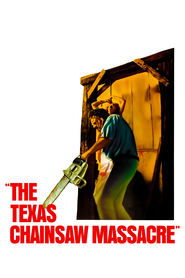
The mask, freshly worn. Not long after, five friends checking on a relative's grave in rural Texas stumble onto the Sawyer farmhouse — and directly into Leatherface, who bursts through a doorway and ends a life in about four seconds flat before hunting the survivors down through the night. He's frantic and almost childlike in his panic here, slamming doors, flailing, clearly following the family's lead more than acting on his own — which tracks for someone only a few years removed from the events of Leatherface. This is the character the world actually met in 1974: an adult in body, still very much a product of the house that raised him.
3. The Texas Chainsaw Massacre 2 (1986)
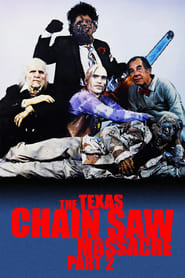
The tradesman. Thirteen years on, the family has gone into business — literally, running an award-winning chili stand built on ingredients nobody wants to think too hard about. Leatherface is more confident now, comfortable in his role, even prone to something like flirtation when a radio DJ named Stretch catches his attention after airing a recording of one of the family's murders. That fixation, and the arrival of a vengeful ex-Texas Ranger with his own history with the family, drags the Sawyers out of hiding for the first time.
4. Leatherface: The Texas Chainsaw Massacre III (1990)
The reluctant provider. A young couple wandering off the highway stumbles into Sawyer land, and Leatherface goes back to hunting — bigger, meaner chainsaw, same instinct to protect the family compound at any cost. But this entry is also the closest the character gets to tenderness: he forms a real, quiet bond with a young girl in the family, one of the only relationships in the franchise where Leatherface isn't simply a weapon being pointed at people.
5. The Return of the Texas Chainsaw Massacre (1994)
The unraveling. Four teenagers crash near the family's home on prom night and are pulled into the most chaotic version of the Sawyers yet, ruled over by an increasingly manic "brother," Vilmer, and manipulated from the shadows by a mysterious operative named Rothman. Leatherface — here nicknamed "Junior" — is at his most uncertain and emotionally fragile in the whole series, at one point even dressing in women's clothes and makeup, seemingly searching for some kind of identity inside a family that's stopped making any sense at all.
6. Texas Chainsaw 3D (2013)
The hidden man. Jump forward roughly forty years — story-wise, this one picks up directly from 1974 and quietly sets the two sequels in between aside. Leatherface has spent decades locked in the basement of the family's Texas mansion, kept alive and hidden by relatives protecting a secret: a young woman named Heather is actually a Sawyer by blood, and the man in the basement is family. By now he's older, slower, and has lived almost his entire adult life in near-total isolation, glimpsed only when the house's secret is finally disturbed.
7. Texas Chainsaw Massacre (2022)
The hermit. Fifty years after that first summer, Leatherface is an old man living alone in an abandoned orphanage in the ghost town of Harlow, cared for by one elderly woman who treats him like a son. When a group of young entrepreneurs arrive to gentrify the town and the confrontation over the building turns fatal, it's enough to send him back out into the world one more time — and enough to draw original survivor Sally Hardesty, now a hardened Texas Ranger, back into his life for a final reckoning. This is Leatherface at the end of the road: isolated, grieving, and still, after fifty years, unable to be left alone.
The Retelling: The Hewitt Family
Separate family, separate town, same summer of 1973 — these two rebooted the mythology rather than continuing it, so they sit outside the arc above.
The Texas Chainsaw Massacre: The Beginning (2006)
A baby born with severe deformities in a 1939 slaughterhouse is abandoned by the plant supervisor and rescued by Luda Mae Hewitt, who raises him as her son, Thomas. Thirty years later, Thomas is still working that same killing floor — the only place he's ever felt competent — until the plant closes and his old tormentor forces him out. Something breaks; he kills with a hammer, picks up a chainsaw for the first time, and the Hewitt family closes ranks around him, setting the stage for everything that follows.
The Texas Chainsaw Massacre (2003)
Not long after, a group of friends road-tripping through rural Texas pick up a traumatized hitchhiker who takes her own life in their van. Trying to do the right thing and report it, they wander straight into Hewitt territory — and into Thomas, now fully transformed into the chainsaw-wielding, face-collecting killer the family calls "Leatherface," guided and covered for by the family's twisted patriarch, "Sheriff" Hoyt.
All nine official Texas Chainsaw films are indexed on the Holiday Horror Database's Texas Chain Saw Day page — worth a browse if you're building out the rest of your watchlist tonight.